
How Scalp Exfoliation Clears the Way for Long, Healthy Hair.
By Tabatha Barnaby
Owner, Julia Grace Salon
Long, beautiful hair doesn’t begin at the ends. It begins at the scalp.
Ask any of our haircare specialists at Julia Grace Salon and they’ll say, while nourishing your lengths with masks, oils, serums, and conditioners is important, the place where every strand begins is often overlooked. Your scalp. The scalp is living skin—and like the skin on your face, it benefits from thoughtful cleansing, gentle exfoliation, and consistent care.
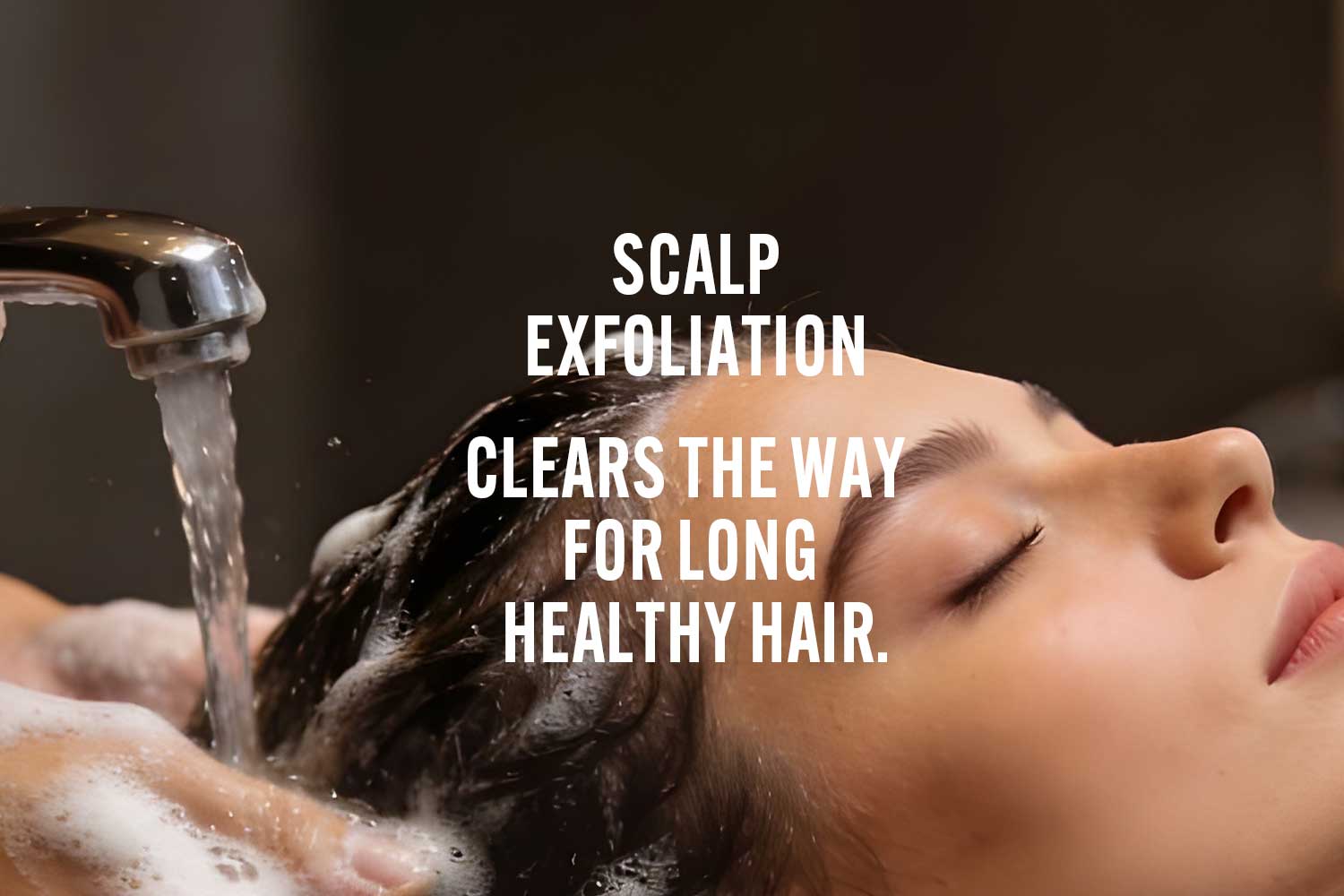
Enter scalp exfoliation: a simple but luxurious step that can help sweep away dead skin cells, excess oil, and product buildup, leaving your scalp feeling refreshed and your hair-care routine working from a cleaner foundation.
While exfoliating your scalp won’t magically accelerate hair growth, it can support a healthier scalp environment and complement the habits that help you grow—and, just as importantly, retain—long, healthy hair.
Why a Healthy Scalp Is the Foundation for Long Hair?
Think of your scalp as the foundation of your hair-care routine. Each strand begins at the follicle, making the condition of the scalp an important part of the overall hair-growth picture.
Everyday life can leave behind a mixture of sebum, sweat, dead skin cells, dry skin, and styling-product residue. Regular cleansing helps remove this buildup, while gentle exfoliation can provide an additional way to lift away what shampoo alone may not fully remove.
The goal isn’t to scrub your scalp into submission. It’s to create a clean, balanced, comfortable environment where your hair-care routine can begin.
It’s also important to separate healthy scalp care from claims about accelerated growth. Hair growth is influenced by factors including genetics, hormones, age, nutrition, and overall health. Scalp exfoliation isn’t a proven treatment for hair loss or a shortcut to faster growth. Instead, think of it as foundational maintenance—similar to cleansing and conditioning—designed to keep your scalp and hair in their best possible condition.
The Beauty Benefits of Scalp Exfoliation.
A thoughtfully exfoliated scalp can offer benefits that go beyond the pursuit of longer hair.
- Helps Remove Product Buildup.
Dry shampoo, styling creams, oils, gels, and other products can accumulate around the scalp. Exfoliation can help loosen residue and dead skin, leaving the scalp feeling cleaner and refreshed. - Supports a Fresh, Balanced Scalp.
Excess oil and dead skin can contribute to an uncomfortable or congested feeling. Gentle exfoliation, paired with appropriate cleansing, can help maintain a fresher-feeling scalp. - Helps Create a Clean Canvas for Scalp Care.
A well-cleansed scalp provides a better starting point for products formulated for scalp care. Exfoliation should complement—not replace—your regular cleansing routine. - Can Support the Appearance of Healthier Hair.
Healthy-looking hair isn’t solely about how quickly it grows. Length retention matters. If hair is constantly breaking at the ends, it can be difficult to see progress even when new hair is growing from the scalp. A complete hair-care ritual should therefore address both the scalp and the lengths.
How to Exfoliate Your Scalp the Right Way.
When it comes to scalp exfoliation, gentle is beautiful.
There are two primary approaches: physical exfoliation and chemical exfoliation.
Physical exfoliation involves using a scalp scrub or a specially designed scalp brush to loosen dead skin and buildup. The key is a light touch. Massage the scalp with your fingertips rather than aggressively scratching or scrubbing.
Chemical exfoliation uses ingredients designed to loosen dead skin cells and buildup. Ingredients such as salicylic acid are found in some scalp and dandruff treatments and can be particularly useful when excess scaling or oil is an issue.
Whichever method you choose, follow the product’s instructions and avoid over-exfoliating. The scalp is delicate skin, and excessive friction or frequent exfoliation can lead to dryness, redness, or irritation.
A Simple Scalp Exfoliation Ritual.
For an at-home ritual, begin by gently wetting your scalp and applying your chosen exfoliating product according to its directions. Massage lightly with your fingertips, concentrating on the scalp rather than dragging the product through your lengths.
Rinse thoroughly, then follow with your usual shampoo and conditioner if the product directions call for it. Finish with a nourishing treatment through the mid-lengths and ends.
The experience should feel refreshing—not abrasive.
If your scalp is irritated, sunburned, broken, or inflamed, wait until it has healed before exfoliating. Persistent itching, redness, heavy flaking, or significant shedding can be signs of an underlying scalp or hair condition and are best evaluated by a dermatologist.
The Long-Hair Ritual Starts at the Root.
Growing long hair is less about chasing a miracle solution and more about creating the conditions that allow your hair to thrive while protecting the length you’ve already grown.
Scalp exfoliation can be one vital piece of that ritual. By helping remove buildup and dead skin, it supports a clean, cared-for scalp—the starting point for your broader hair-care routine.
Stop into Julia Grace Salon in Madison, Wisconsin and talk to one our haircare specialists about how best to pair scalp exfoliation with gentle cleansing, regular conditioning, protection from excessive heat, careful detangling, and habits that minimize breakage. Together, these small rituals can help your hair look and feel healthier while giving you the best opportunity to grow, nourish, and retain beautiful length.
Because when it comes to long, healthy hair, the secret isn’t only in what you put on your ends. It starts at the root.
Until next time, remember that a good hair day can be every day.
Exfoliation FAQ
Q: Why is localized scalp care, like exfoliation, particularly relevant for hair routines in Madison, Wisconsin?
Answer: Madison experiences distinct seasonal shifts, ranging from cold, dry winters with indoor heating to warm, humid summers that ramp up sweat, oil production, and the use of heavy styling or dry products. These dramatic weather changes and environmental transitions can trap sebum, sweat, and product residue against the skin, making seasonal scalp congestion a common issue.
Q: Does scalp exfoliation actually make your hair grow faster?
Answer: No, scalp exfoliation does not magically accelerate the biological rate of hair growth, which is primarily driven by genetics, hormones, age, and internal nutrition. Instead, think of exfoliation as foundational maintenance. By clearing away stubborn buildup, excess sebum, and dead skin cells that standard shampoo might miss, it creates an optimal, balanced environment at the follicle level. This supports overall scalp health and complements the habits necessary to grow and retain long, healthy hair.
Q: What is the difference between physical and chemical scalp exfoliation?
- Physical exfoliation involves mechanical action—such as using a specialized scalp scrub or a massaging scalp brush—to manually loosen and sweep away dead skin and residue. The golden rule here is a light touch: always massage with your fingertips using gentle pressure rather than aggressively scrubbing or scratching.
- Chemical exfoliation utilizes active ingredients (such as salicylic acid) formulated into scalp treatments to gently dissolve and loosen dead skin cells and buildup. This method can be particularly beneficial for managing excess oil or scaling without requiring friction.
Q: How can scalp exfoliation help with length retention?
Answer: Growing long hair is just as much about keeping the hair you already have as it is about producing new strands. When the scalp is congested with styling product residue, dry shampoo, and oils, it can leave the entire root area feeling weighed down and unrefreshed. By maintaining a clean, clarified scalp canvas, your targeted scalp-care and cleansing routines function more effectively. Furthermore, pairing a healthy scalp routine with proper mid-length and end care minimizes breakage, allowing you to actually see and retain your length over time.
Q: How often should you exfoliate your scalp, and are there times you should avoid it?
Answer: Moderation is key because the scalp is delicate living skin. Over-exfoliating or using excessive friction can disrupt the skin barrier, leading to dryness, redness, or irritation. Always follow the specific instructions of the product you are using and listen to your scalp. You should completely avoid exfoliating if your scalp is currently irritated, sunburned, broken, or inflamed. Wait until the skin has completely healed. Additionally, if you experience persistent itching, heavy flaking, chronic redness, or significant shedding, these can be signs of an underlying dermatological condition that requires evaluation by a professional.
Q: What is the proper step-by-step ritual for exfoliating the scalp at home?
Answer: To perform an at-home scalp exfoliation ritual safely and effectively:
- Begin by thoroughly wetting your scalp with warm water.
- Apply your chosen physical or chemical exfoliant directly to the scalp following the product’s specific directions.
- Using your fingertips, gently massage the product into the scalp.
- Focus your attention on the scalp itself rather than aggressively dragging or pulling the product down through the lengths of your hair.
- Rinse the scalp and hair thoroughly.
- Follow up with your usual shampoo and conditioner if required by the exfoliant’s directions, and finish by applying a nourishing treatment or conditioner.